
I came to Yokiwa village in Papua as an artist and a children’s art teacher, invited to share a learning space together. During one week of living and engaging in daily activities with them, I brought with me experiences from teaching in both formal and non-formal settings. My background in cultural studies, along with an awareness of my position as a woman from Kalimantan who grew up close to nature, shaped the way I entered this space. This presence was not only an act of knowledge sharing but also a space for reflection on how education, art, and ethics are intertwined within an equal and respectful relationship.
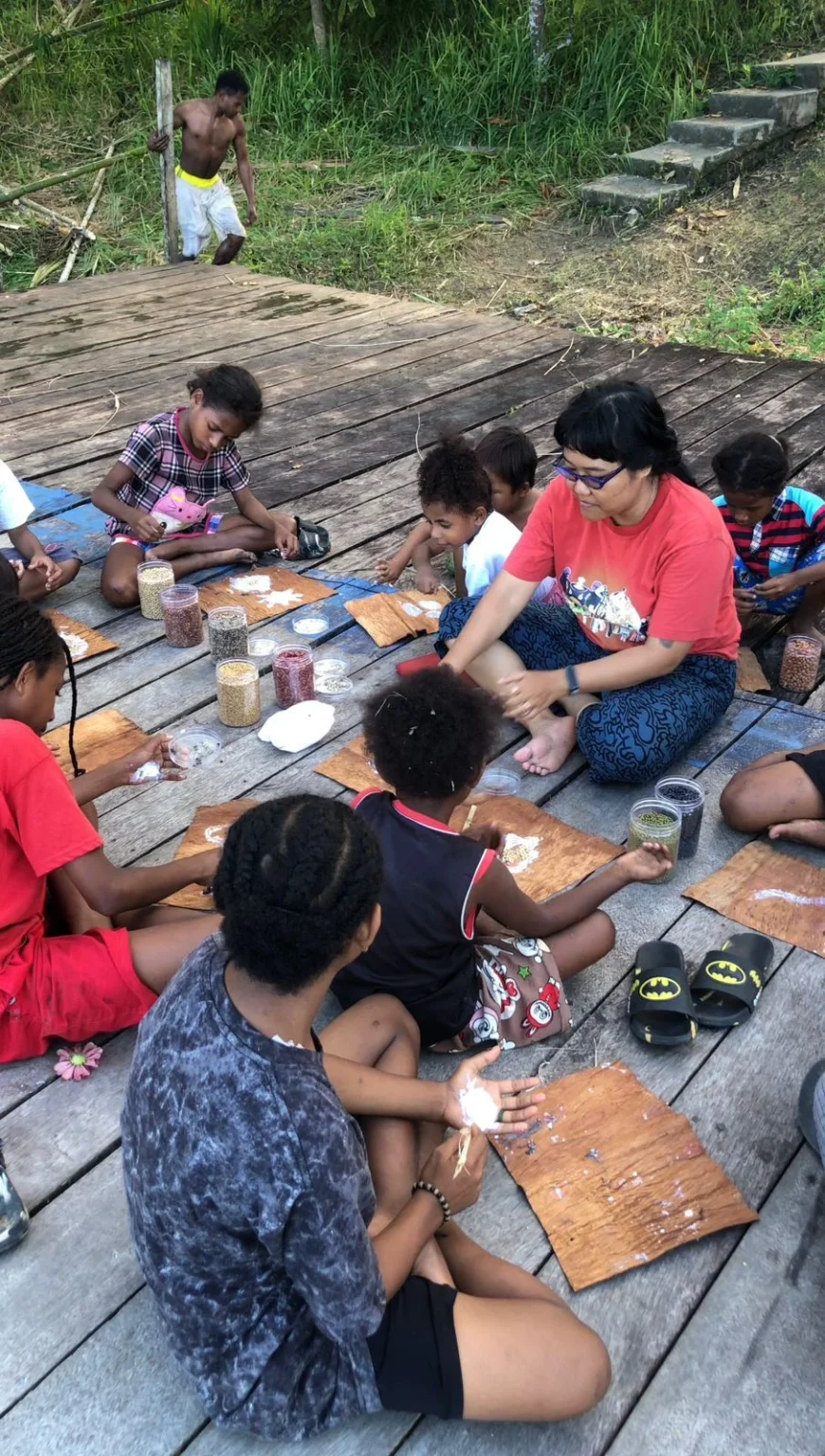
In this photograph, I am sitting together with Papuan children, sharing a learning space through a simple artistic activity: creating collages from seeds and natural materials that we gathered from our surroundings. I intentionally chose natural materials as a medium, inviting the children to learn together from their own environment as a source of knowledge and creativity. In this process, I did not position myself as the center of attention but as part of a learning environment that grew collectively.
As an art teacher, I am accustomed to being in a position of giving direction. However, my experience in Yokiwa taught me that art education becomes more meaningful when educators are willing to let go of excessive control. Rather than arriving with a fixed learning agenda, I intentionally spent my days following the rhythm of the children’s lives. The early days were devoted to getting to know one another, playing, and learning with nature: observing flowers, playing simple traditional games, picking kedondong fruit, and ending the day with an afternoon swim in Lake Sentani. In the days that followed, we walked to the mountains, collected dried seeds, harvested water spinach to cook and eat together, and learned everyday practices such as using gedi leaves as natural shampoo.
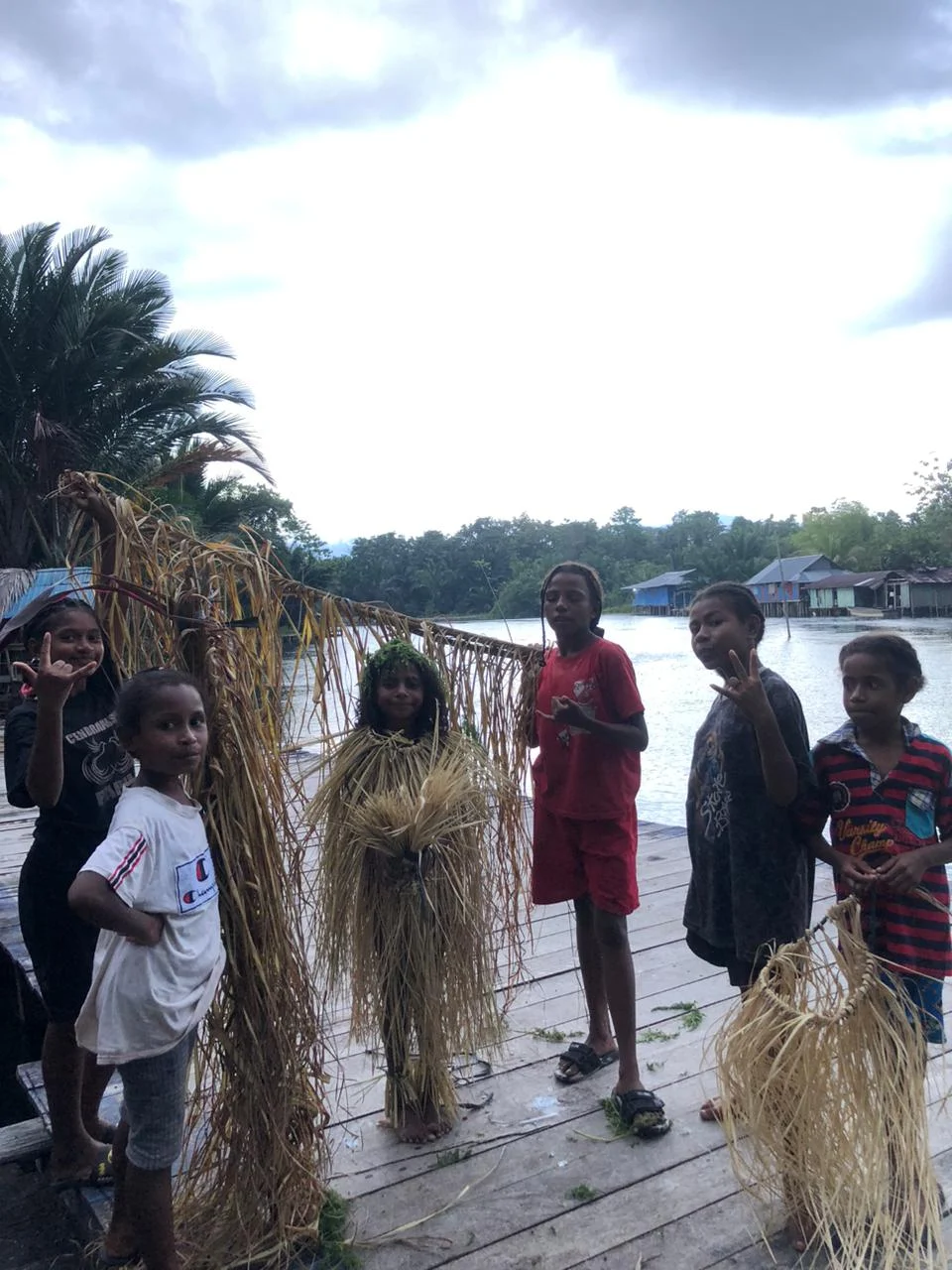
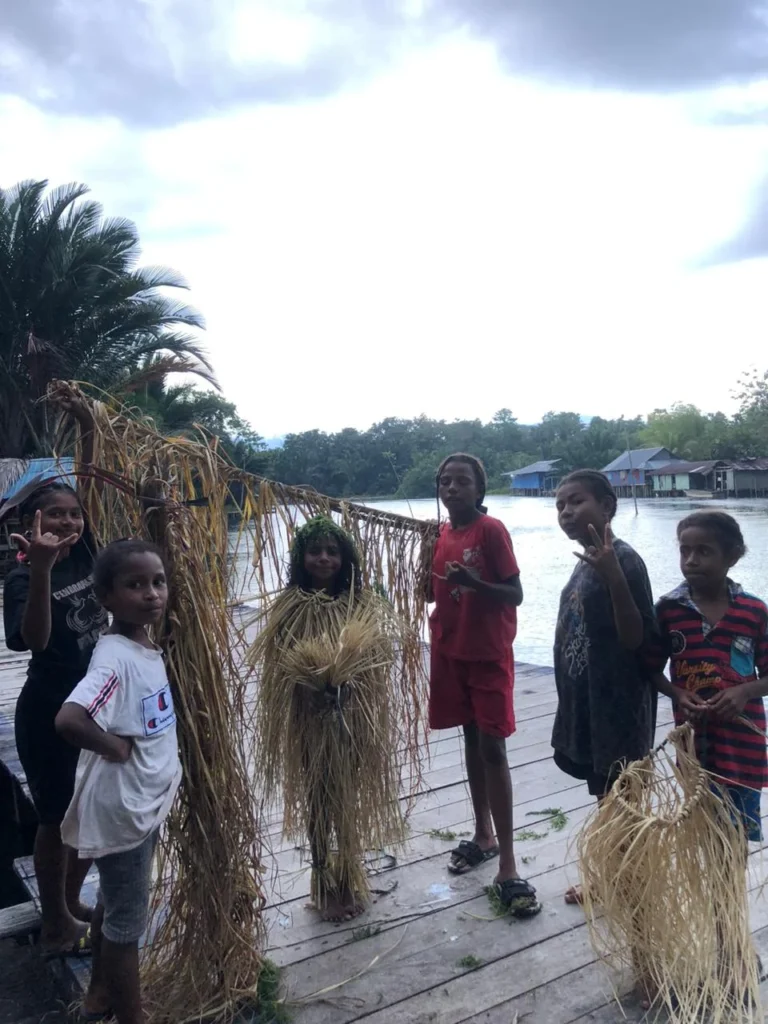
We also entered the forest to pick jackfruit, then sat by the lakeshore arranging collages from tree bark and seeds. The creative process unfolded alongside playing in the water and wearing simple costumes made from young coconut leaves. Other days were marked by fishing, heavy rain that caused power outages, and shared activities around Lake Sentani. I was invited to visit their school, play in the grass, pick guava fruit, hike hills, and later draw together with a master artist from Sentani. I also witnessed a broader collective process, as residency artists worked alongside local artists while children practiced singing and dancing for an exhibition.
This series of experiences taught me that art education does not always begin in classrooms or structured schedules. It grows from trust, closeness, and a willingness to learn together. Children are not positioned as passive recipients but as active subjects who choose, experiment, and express themselves in their own ways. In this context, my role was closer to that of a facilitator who keeps the space safe and equal, rather than a single authority.
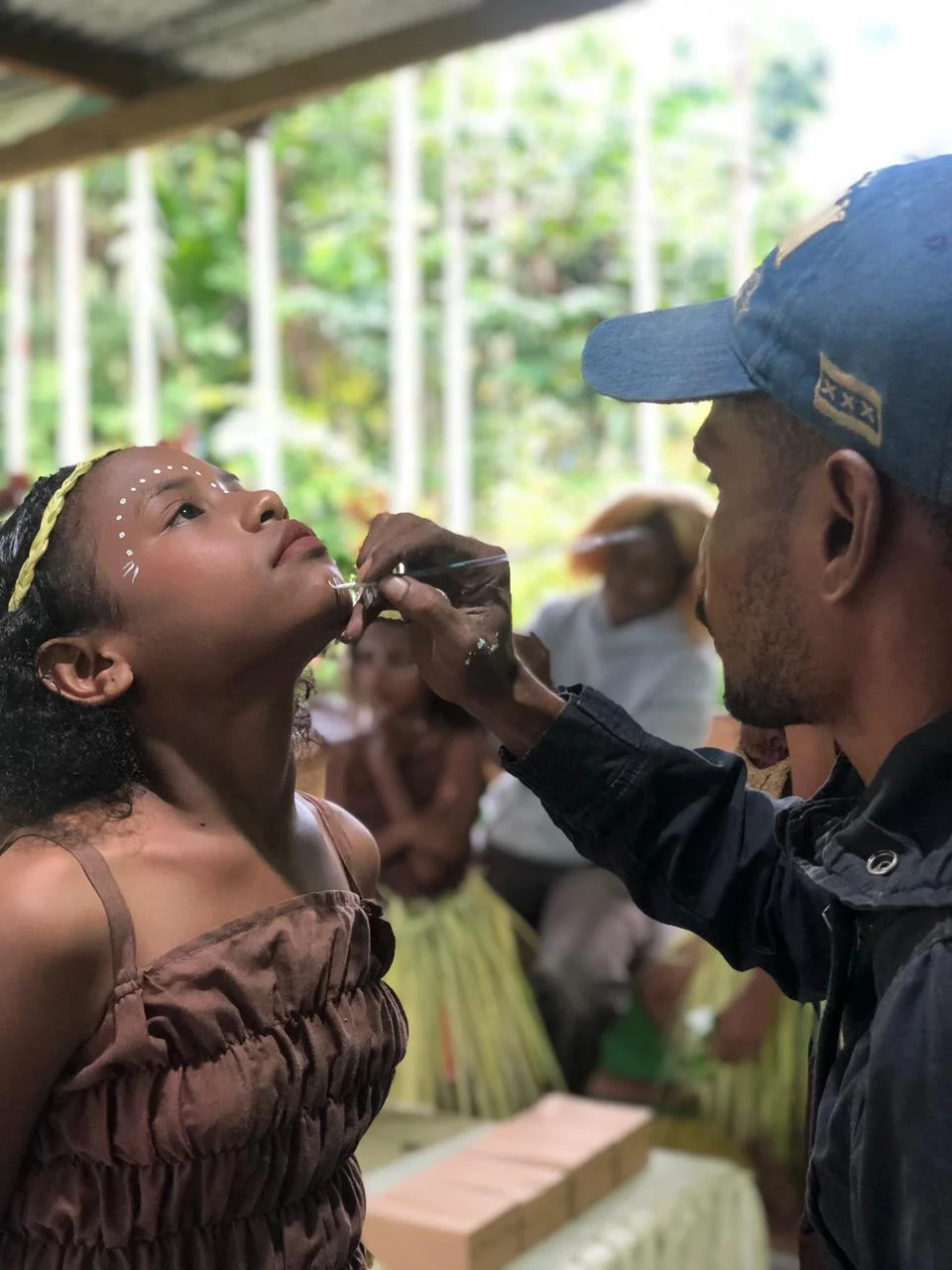
My background in cultural studies has made me sensitive to power relations that often appear unconsciously within educational practices. Good intentions can turn into forms of domination when educators are not reflective about the positions and privileges they carry. By sitting at the same level and following the children’s daily lives, I sought not to treat them merely as objects of activity or representation but as subjects actively involved in a shared learning process. This awareness also guided the way I documented my experience during my time in Yokiwa, ensuring that the process continued to respect relationships, consent, and dignity. The use of natural materials likewise became a reflection of my relationship with nature.
As a woman from Kalimantan, I grew up with the awareness that nature is not merely a backdrop or a resource but a part of life that deserves respect, as Papuans say, “You take care of nature, and nature will take care of you.” Through art, children learn that their surrounding environment holds value, meaning, and creative potential that is worth protecting. For me, this experience was also a way of loving and honoring myself as an educator and as a woman. By not forcing roles, I learned to respect boundaries, nurture empathy, and remain grounded in the values I believe in. Yokiwa taught me that art education is not only about creating artworks but also about building relationships that are just and humane. In this simple learning space, art became a shared language, and leadership emerged not as command but as a presence rooted in respect and responsibility.
Author: Fasmaqullah | The Winner of YADEMA ActWISE+ Photo Essay Contest