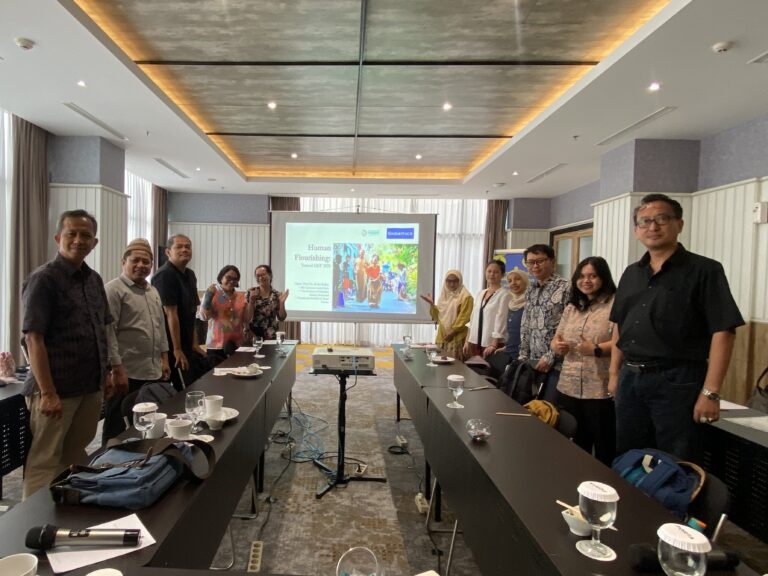


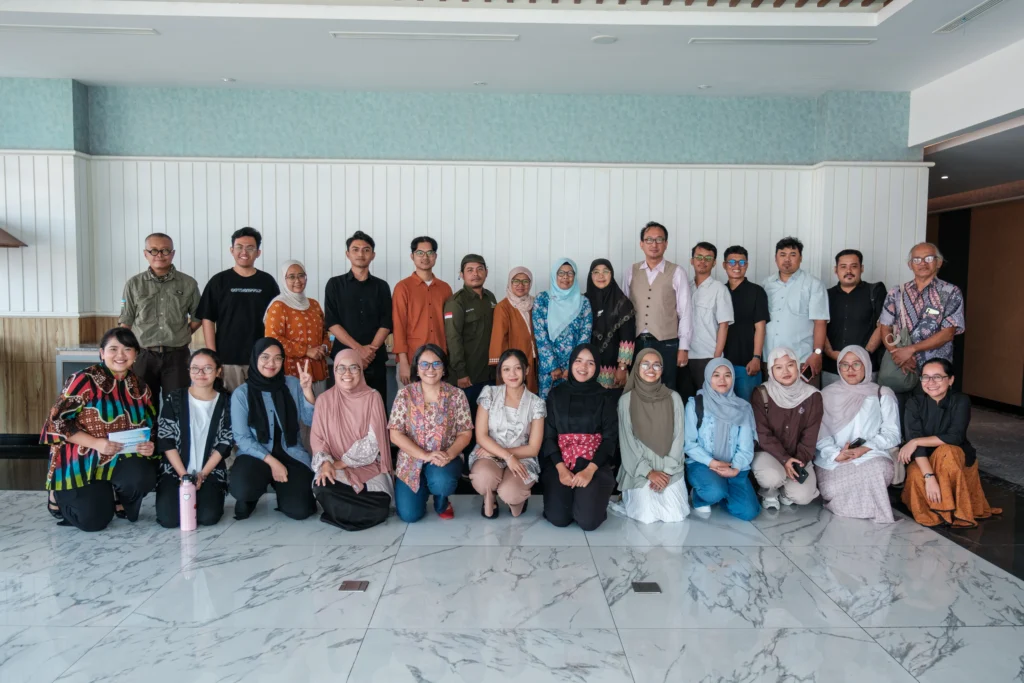
Yogyakarta, July 4, 2026 – Leading up to the Global Ethics Forum (GEF) 2026 in Bali on October 20–22, 2026, Yayasan Dharma Etika Madani (YADEMA), together with Globethics, organized “Road to Global Ethics Forum 2026: Human Flourishing through Storytelling” at Porta Hotel, Yogyakarta, on Saturday (4/7). This event was made possible through collaboration with Baylor University and Universitas Gadjah Mada as Knowledge Partners, and National Geographic Indonesia as Media Partner.
This event invited academics, practitioners, students, and the general public to understand the concept of human flourishing while exploring how stories and visual narratives can be a means to build a more complete understanding of human life. The event was divided into two main sessions: Expert Talks: Unlocking the Concept and Editorial Masterclass: The Story Lab.
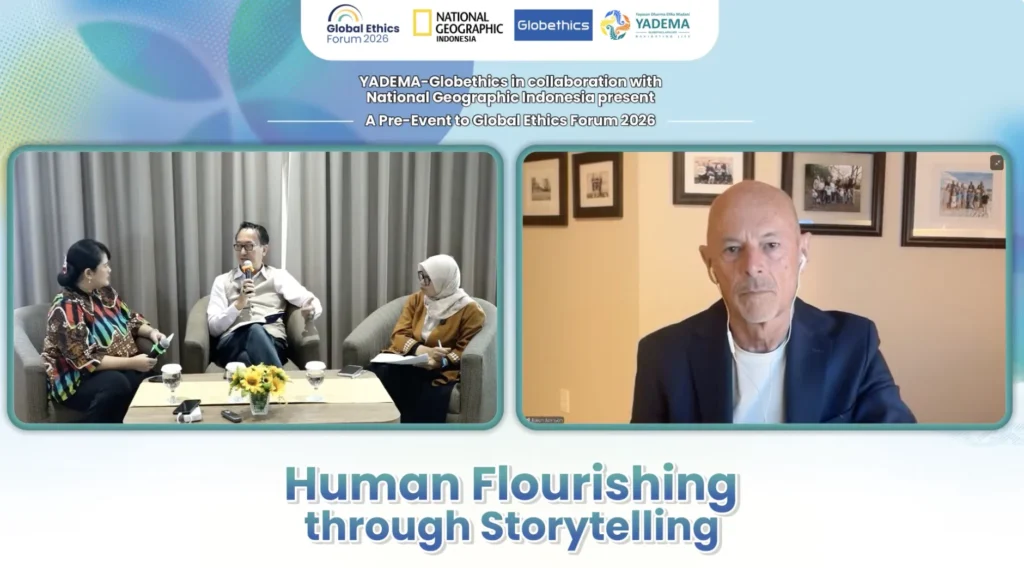
In the Expert Talks session, Distinguished Professor Dr. Byron Johnson, Director of the Institute for Global Human Flourishing, Baylor University, presented the latest developments of the Global Flourishing Study, one of the largest international studies on human well-being involving over 200,000 respondents from 22 countries. Unlike approaches that only measure happiness, this research views human well-being multidimensionally through various aspects of life.
Dr. Johnson explained that the study results show Indonesia is among the countries with a high level of human flourishing. He also highlighted several consistent findings across various countries, such as the well-being challenges faced by the younger generation, the importance of social and family relationships, and the contribution of spiritual values to human life.
This perspective was then enriched by Assoc. Prof. Dr. Dicky Sofjan, Founder and Board Member of YADEMA, Vice President of Globethics, and lecturer in Interreligious Studies at Universitas Gadjah Mada. He emphasized that the concept of human flourishing needs to be understood through the lens of culture and local context, not merely by adopting a Western framework.
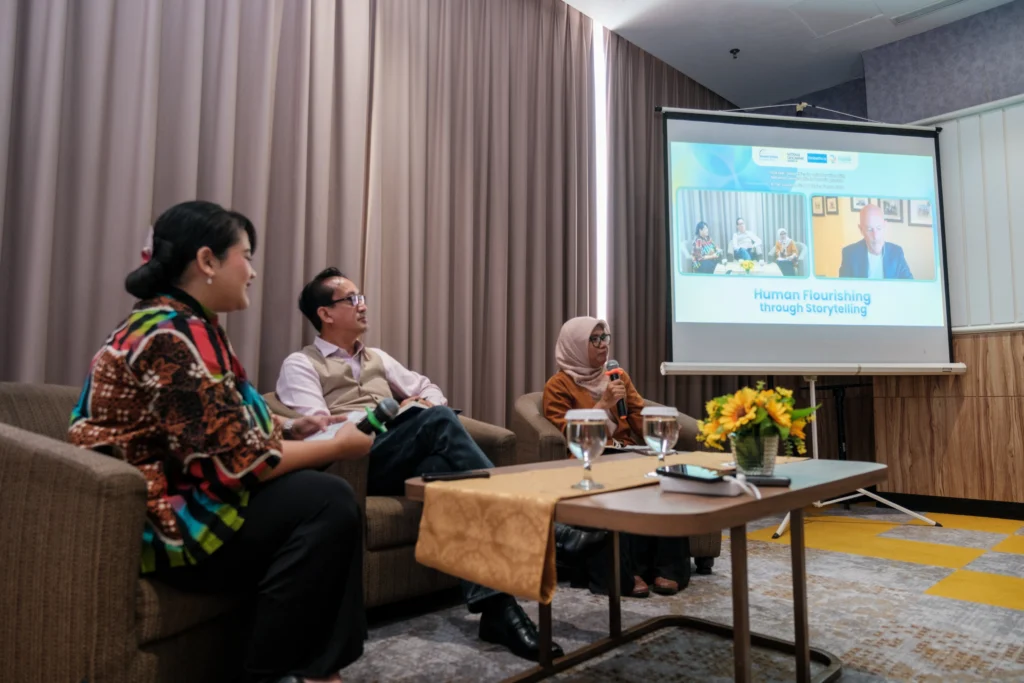
According to him, the Indonesian people’s understanding of a good life cannot be separated from human relationships, religious values, and connection with nature. Therefore, research on human flourishing needs to continue to involve perspectives from the Global South to represent the diversity of human experience in a balanced way.
Complementing the discussion, Elis Zuliati Anis, Ph.D., a lecturer in Communication Science at Universitas Ahmad Dahlan, discussed the role of photography in representing human experience. She explained that images not only serve as documentation but also shape how the public understands social reality.
She invited visual storytellers to apply an ethical approach in documenting community life, prioritizing respect for human dignity, empathy, and a more balanced representation. According to her, photography has the ability to capture various dimensions of human flourishing that often cannot be explained through numbers or statistical data alone.
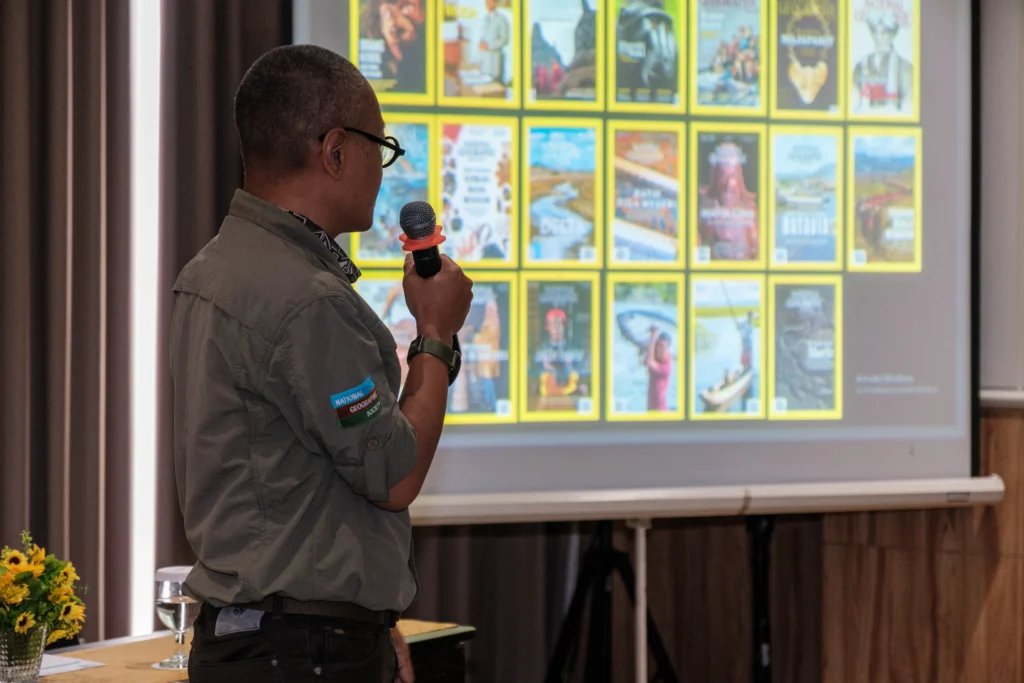
In the second session, the Editorial Masterclass, Managing Editor of National Geographic Indonesia, Mahandis Yoanata, guided participants to understand the creative process behind compiling visual stories. Through various case studies and exercises, participants were encouraged to develop ideas, build narratives, and consider ethical aspects in producing meaningful visual works.
As part of the event series, YADEMA and Globethics also officially launched the Global Ethics Forum 2026 “Human Flourishing” Photo Essay Competition. This competition invites photographers, journalists, students, and the general public to highlight stories about human flourishing through photo essays that prioritize truth, human dignity, and empathy.
Selected works will be exhibited at the Global Ethics Forum 2026 in Bali and have the opportunity to be featured through the official channels of National Geographic Indonesia, YADEMA, and Globethics.
Through the Road to Global Ethics Forum 2026, YADEMA hopes that the discussions on human flourishing would be enriched beyond academic works, but also inspiring the public in many ways, including but not limited to storytelling practices that are ethical, inclusive, and inspiring.